
Water damage rarely happens during business hours. A pipe can burst overnight in Brentwood. A water heater can fail while a family is away for the weekend in Franklin. A severe Tennessee thunderstorm can flood a commercial property in downtown Nashville before anyone has time to react.
When water enters a structure unexpectedly, every hour matters. Fast action helps reduce damage, supports the restoration of affected materials, and helps property owners avoid larger problems that often develop when moisture remains trapped inside a building.
For homeowners, commercial property owners, property managers, insurance professionals, and referral partners throughout Nashville, Davidson County, and surrounding Middle Tennessee communities, understanding how emergency water damage restoration works can make the recovery process less stressful and more predictable.
Understanding Emergency Water Damage in Nashville
Emergency water damage occurs when unwanted water enters a property and begins affecting building materials, contents, or structural components. Unlike a minor plumbing issue that can wait for a scheduled repair, emergency water damage requires immediate attention because water spreads quickly through porous materials.
Throughout Nashville and surrounding communities such as Murfreesboro, Mount Juliet, Smyrna, Clarksville, and Columbia, water damage often results from burst pipes, appliance failures, overflowing plumbing fixtures, roof leaks, storm-related flooding, and sewer backups.
Middle Tennessee's seasonal storms create unique challenges for property owners. Heavy rainfall can overwhelm drainage systems and expose vulnerabilities in roofing, foundations, and building envelopes. Commercial properties often face additional risks because larger facilities may contain extensive plumbing systems, multiple HVAC units, and large roof surfaces that can conceal developing water intrusion.
Whether the property is a historic home near East Nashville or a commercial office building in Davidson County, the goal remains the same: identify the source, remove the water, dry the structure, and restore normal conditions as quickly as possible.
Common Causes of Emergency Water Damage
Water damage can develop suddenly or gradually. Understanding the difference helps property owners recognize risks before they become major restoration projects.
Sudden water losses often involve burst supply lines, failed water heaters, broken appliance hoses, overflowing sinks, or severe weather events. These incidents can release significant amounts of water in minutes.
Gradual water damage usually develops behind walls, beneath flooring, or above ceilings. A small roof leak may go unnoticed during several rain events. A slow plumbing leak hidden inside a wall cavity can continuously introduce moisture into building materials for weeks before visible signs appear.
Firefighting efforts can also create water damage. While extinguishing a fire protects lives and property, the water used during suppression activities often requires immediate mitigation and structural drying afterward.
Addressing the root cause remains a key part of the restoration process. Moisture removal alone does not prevent future damage if the original source remains active.
Signs That Require Immediate Attention
Some water damage events are obvious. Standing water across a floor leaves little doubt that action is needed.
Many losses begin with subtle warning signs.
Perhaps you notice hardwood flooring beginning to cup or warp. Maybe paint starts bubbling near a window after several storms. Some property owners first detect a musty odor in a basement or crawlspace. Others discover unusually high water bills that suggest a hidden plumbing leak.
Moisture trapped inside building materials creates an environment where mold growth can develop within 24 to 48 hours under favorable conditions. This timeline is one reason professional inspection becomes valuable whenever moisture is suspected.
The sooner water intrusion is identified, the greater the opportunity to restore materials and reduce disruption.
Understanding Water Damage Categories and Classes
Professional restoration teams use standardized classification systems outlined in the ANSI/IICRC S500 Standard for Professional Water Damage Restoration to evaluate water losses and develop appropriate drying plans.
Water damage categories describe the level of contamination associated with the water source.
Category 1 water originates from a sanitary source and presents the lowest contamination risk. Examples include broken water supply lines or sink overflows that contain clean water.
Category 2 water contains contaminants that may cause discomfort or illness if exposure occurs. Common examples include dishwasher discharge, washing machine overflow, or water containing organic matter.
Category 3 water contains significant contamination. Sewage backups, river flooding, and water carrying harmful substances fall into this category and require specialized handling procedures.
Classes of water damage measure the extent of moisture absorption and material saturation. Class 1 losses involve minimal absorption, while Class 4 losses affect deeply saturated materials such as hardwood flooring, concrete, brick, and plaster.
These classifications help restoration professionals determine equipment needs, drying strategies, and project timelines.
Why Immediate Response Matters
Water is persistent. It follows gravity, penetrates porous materials, and migrates into hidden spaces where damage often continues unnoticed.
Fast emergency response helps reduce secondary damage, supports structural stability, increases the likelihood of restoring materials, and improves overall project outcomes. Industry standards emphasize rapid mitigation because moisture that remains in place continues affecting materials long after the initial event has ended.
Insurance carriers also expect property owners to take reasonable steps to prevent additional damage after a loss occurs. Prompt mitigation supports that objective while creating valuable documentation for the claims process.
A delay of even a day or two can significantly change the scope of a restoration project.
What Happens During the Emergency Water Damage Restoration Process?
Many property owners have never experienced a water loss and wonder what happens after making the initial call.
The process begins with a comprehensive inspection and moisture assessment. Restoration professionals identify affected materials, determine the category and class of water damage, locate hidden moisture, and establish a drying strategy.
Water extraction follows immediately. Specialized extraction equipment removes standing water before it can continue migrating throughout the structure.
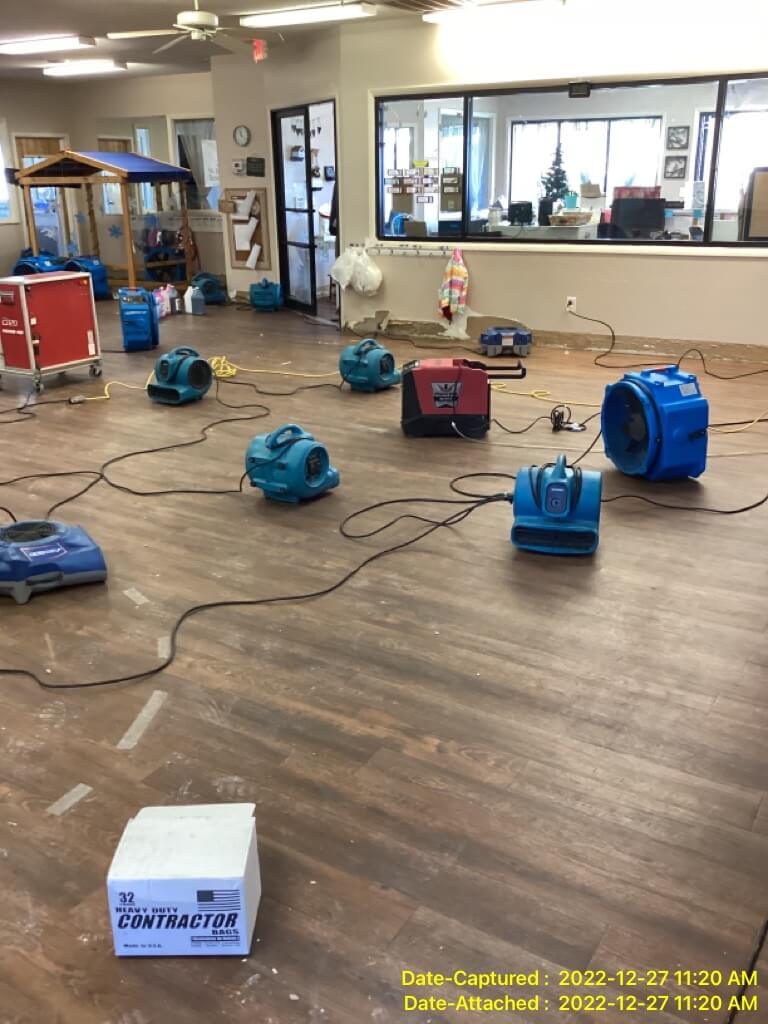
After extraction, drying and dehumidification equipment is installed. Air movers create controlled airflow across wet materials, while commercial dehumidifiers remove moisture from the air.
Throughout the project, technicians monitor moisture readings using specialized instruments. Adjustments are made as drying progresses to ensure materials reach appropriate moisture levels.
Cleaning, sanitization, and documentation occur throughout the process. Detailed records, photographs, moisture logs, and project notes help property owners, adjusters, and insurance carriers understand conditions and restoration progress.
Professional Water Extraction and Structural Drying Techniques

Professional water damage restoration relies on much more than removing visible water. Moisture often travels beneath flooring, behind drywall, inside insulation, and into structural framing where it remains hidden from view.
High-capacity extraction equipment removes water quickly and efficiently. Once standing water has been removed, technicians use industrial-grade dehumidifiers and air movers to create controlled drying conditions. Moisture meters, thermal imaging cameras, hygrometers, and moisture mapping tools help identify moisture that would otherwise remain undetected.
Many property owners attempt to dry affected areas using household fans and portable dehumidifiers. While these tools may help with minor moisture issues, they generally lack the capacity needed to dry building materials after significant water intrusion. Professional drying equipment is specifically designed to restore structures according to industry-established drying principles outlined in ANSI/IICRC S500.
Equipment Used During Emergency Restoration
Modern restoration technology allows technicians to make informed decisions throughout the drying process.
Air movers accelerate evaporation from wet surfaces. Commercial dehumidifiers remove moisture from the air and help create conditions that support efficient drying. Moisture detection instruments provide data that guides equipment placement and verifies drying progress.
When microbial growth becomes a concern, HEPA-filtered equipment may be utilized during containment and remediation activities. These filtration systems help reduce airborne particles and support cleaner indoor environments during restoration projects.
Advances in moisture detection technology have dramatically improved the ability to restore materials while minimizing unnecessary demolition. Rather than relying on assumptions, technicians can make decisions based on measurable moisture conditions.
Mold Prevention and Remediation Following Water Damage
Moisture and mold are closely connected. When water remains trapped within building materials, mold can begin developing in as little as 24 to 48 hours under favorable conditions.
Nashville's humid climate creates additional challenges because elevated outdoor humidity can slow natural drying processes. Areas such as crawlspaces, attics, basements, wall cavities, and storage rooms often experience prolonged moisture exposure if drying efforts are delayed.
Professional mold remediation focuses on identifying contamination, establishing containment, removing affected materials when necessary, and reducing harmful mold spores in the indoor environment. ANSI/IICRC S520 guidance emphasizes source control, containment, proper remediation procedures, and verification of project objectives.
By addressing moisture quickly after water damage occurs, property owners significantly reduce the likelihood of mold-related complications.
Health and Safety Considerations During Water Damage Emergencies
Water damage presents more than a property concern. Safety considerations often influence how restoration activities are performed.
Standing water may conceal electrical hazards. Floodwater can contain contaminants. Structural components exposed to prolonged moisture may become weakened. Slip-and-fall hazards frequently develop in affected areas.
Professional restoration teams evaluate these risks before beginning work. Personal protective equipment is selected based on site conditions and contamination levels. Specialized procedures may be implemented when Category 3 water losses or sewage backups are involved.
Commercial properties, healthcare facilities, schools, and multifamily communities often require additional planning to maintain occupant safety while restoration activities are underway.
Navigating Insurance Claims After Water Damage
Most property owners only experience a major water loss once or twice in their lifetime. As a result, the insurance process can feel unfamiliar.
Documentation helps create clarity. Photographs, moisture readings, drying logs, equipment records, and detailed project notes provide valuable information that supports communication between property owners, adjusters, insurance carriers, and restoration professionals.
Rytech Restoration of Nashville understands that many clients simply want guidance through a process they have never encountered before. Detailed documentation and transparent communication help everyone involved understand the scope of damage and the progress being made throughout the restoration process.
The goal is not simply drying a property. The goal is helping stakeholders make informed decisions using accurate information.
DIY Cleanup Versus Professional Emergency Water Damage Restoration
Many property owners ask the same question after discovering water damage: Can I handle this myself?
The answer depends on the extent of the loss.
Small spills and isolated incidents may be manageable with basic cleanup. Larger water losses often involve hidden moisture that remains trapped inside materials long after surfaces appear dry.
Without moisture detection equipment, property owners may not realize water has migrated beneath flooring, behind walls, or into structural components. Drying what can be seen is only part of the challenge.
Professional restoration teams bring specialized equipment, moisture mapping technology, industry training, and experience developed through hundreds of similar projects. Those resources often allow problems to be identified and addressed before they become more significant.
Understanding Water Damage Restoration Costs
No two water damage projects are identical, which makes accurate pricing dependent on an inspection and assessment.
Several variables influence costs. The size of the affected area, the category of water involved, the extent of saturation, accessibility challenges, drying duration, and potential mold remediation requirements all affect project scope.
A small Category 1 water loss affecting a single room requires different resources than a Category 3 sewage backup impacting multiple floors of a commercial property.
Insurance coverage may offset many restoration-related costs depending on policy terms and the cause of loss. Accurate documentation helps support the claims process and creates a clearer understanding of project requirements.
Choosing the Right Emergency Restoration Partner in Nashville
When evaluating restoration companies, response capability often becomes the first priority. Water damage does not wait for business hours.
Property owners should look for companies with 24/7 emergency response, IICRC-certified technicians, advanced moisture detection equipment, strong documentation practices, and experience working with insurance stakeholders.
Local knowledge also matters.
A restoration company familiar with Nashville's historic homes, modern commercial developments, multifamily communities, healthcare facilities, and educational institutions will often recognize challenges specific to local building construction and environmental conditions.
Rytech Restoration of Nashville combines local expertise with the resources of a national restoration brand that has served property owners for more than 30 years. Fast response, advanced drying science, detailed documentation, and a customer-focused approach have helped make Rytech a trusted name throughout the restoration industry.
A Local Perspective From Nashville Restoration Expert Alec Bailey
"Over the years, we've worked in everything from historic homes near downtown Nashville to modern commercial facilities throughout Davidson County and surrounding Middle Tennessee communities. One thing remains consistent: water moves fast. Tennessee storms, aging plumbing systems, frozen pipes during winter weather, and appliance failures all create situations where immediate action produces better outcomes. Our experience with local building materials, crawlspace construction, hardwood flooring systems, and commercial structures allows us to identify moisture challenges quickly and develop drying plans that help preserve as much of the property as possible."
Alec Bailey, Owner, Rytech Restoration of Nashville
That local knowledge becomes especially valuable when dealing with the unique construction styles and weather patterns found throughout Nashville, Franklin, Brentwood, Murfreesboro, Clarksville, and surrounding areas.
How Long Does Emergency Water Damage Restoration Take?
Property owners often want to know how quickly normal operations can resume.
Emergency response typically begins immediately after a loss is reported. Water extraction frequently occurs during the initial visit. Structural drying generally takes between two and five days depending on material types, environmental conditions, and moisture levels.
Larger losses involving multiple rooms, commercial facilities, or highly saturated materials may require additional time. Continuous monitoring helps technicians adjust drying strategies and maintain progress throughout the project.
Every property presents different challenges, which is why timelines are developed based on measured conditions rather than assumptions.
Preventing Future Water Damage in Middle Tennessee
Many water losses can be prevented through proactive maintenance and awareness.
Regular plumbing inspections help identify aging supply lines and fittings before failures occur. Roof maintenance helps reduce storm-related intrusion. Appliance hoses should be inspected periodically for wear and deterioration.
Water leak detection systems and automatic shutoff devices have become increasingly popular among homeowners and commercial property managers because they provide early notification when leaks occur.
Commercial properties often benefit from pre-loss planning programs that document building information, emergency contacts, utility shutoff locations, and response procedures before an emergency occurs. Having a plan in place reduces confusion and helps stakeholders respond more effectively when unexpected events arise.
Emergency Restoration Services Available Near You in Nashville

Whether you own a home in Franklin, manage a commercial property in Nashville, oversee multifamily housing in Murfreesboro, or support policyholders throughout Davidson County and Middle Tennessee, understanding how emergency water damage restoration works helps you make informed decisions when every hour matters.
If you're searching for professional emergency water damage restoration services in Nashville, having a trusted resource available before an emergency occurs can provide confidence and peace of mind.
FAQs: Answering Your Pressing Water Damage Restoration Questions
At Rytech Nashville, we understand that water damage can be overwhelming. To help you during this challenging time, we've compiled a list of FAQs. Here, you'll find detailed information about our services, the restoration process, and what to expect when you work with us.